
New long-term data from the TRIUMPH-1 extension trial — presented at the American Diabetes Association’s 2026 Scientific Sessions — shows retatrutide drove an average of 30.3% body weight loss a 104 weeks, and 65% of participants dropped below the obesity threshold entirely. That puts a weekly injectable in the same conversation as gastric bypass and sleeve gastrectomy.
The Headline Number
The phase 3 TRIUMPH-1 program followed adults with obesity (BMI ≥30, many ≥35) for 80 weeks on retatrutide 12 mg. Average weight loss: 70.3 pounds. In a separate 104-week blinded extension of the BMI ≥35 subgroup, that figure climbed to roughly 85 pounds — about 30% of starting body weight. More than a quarter of participants lost at least 35% of their body weight.
This is the first time a pharmacologic therapy in a large randomized trial has hit bariatric-surgery-magnitude weight loss at long-term follow-up. Most prior GLP-1 and GIP/GLP-1 agents plateau in the 15–22% range. Retatrutide is a triple agonist — GIP, GLP-1, and glucagon — and that third mechanism appears to be the difference.
The Diabetes-Specific Numbers
The retatrutide diabetes program — TRANSCEND-T2D-1 — followed early Type 2 diabetes patients (baseline A1c ~7.9%) for 40 weeks. Results were striking:
- Up to a 2.0 percentage point reduction in A1c at 40 weeks
- 90% of participants hit an A1c below 7.0%
- Up to 46% reached an A1c below 5.7% — the threshold technically defined as non-diabetic
- 16.8% average body weight loss (~37 pounds) at 40 weeks, with no plateau
These are the strongest A1c and weight-loss numbers ever posted in a late-stage Type 2 diabetes trial. The drug is effective at exactly what it was designed to do.
What the Mainstream Press Isn’t Asking
Two questions the headlines are skipping:
One: the 16–17% weight loss number in the diabetic population is roughly half the 30% number in the obesity-only population. The reason is simple — the diabetic trial ran 40 weeks, while the obesity trial ran 80–104 weeks. Translation: weight loss in Type 2 diabetics on retatrutide has not finished yet, and patients who stay on the drug are likely to keep losing.
Two: “no plateau” cuts both ways. If a drug hasn’t plateaued at 40 or 80 weeks, the patient is still actively depending on the medication to do the metabolic work. Stop the drug, and the weight and the A1c come back. That isn’t a knock on incretin therapy — it’s how the class works. But it means retatrutide is a long-term commitment, not a cure.
Both Paths Deserve to Be on the Table
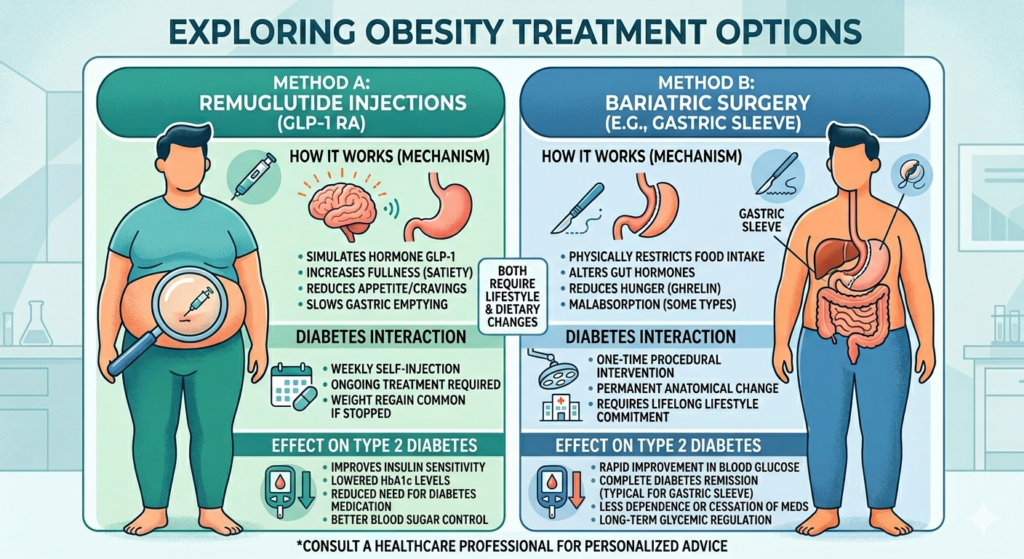
For some patients, GLP-1 therapy is the right call — especially when paired with a structured lifestyle program. The drug works, and we respect the data. For others, the goal is something different: full reversal — an A1c below 6.4% off all medications, sustained without a lifetime prescription.
That’s exactly what we built at Diabetes Reversal Group. Our system is the world’s only patented protocol designed specifically to reverse Type 2 diabetes (patent granted September 2020). Average completion A1c: 4.7%. Average time to reversal: 4.5 months. Delivered via telemedicine and a mobile app, with 240 recipes and 7-day meal plans built into the program.
Want to See If You Qualify?
If you’re currently on a Type 2 diabetes medication and want to explore whether reversal is possible for you, watch our free webinar at hello.diabetesreversalgroup.com. No pressure. No hard sell. Just the data, and a real answer for your situation.
By: Dr. Jeffrey Hockings / Co-Founder/CEO / Diabetes Reversal Group
Kristine Burke, MD / Chief Medical Officer / Diabetes Reversal Group